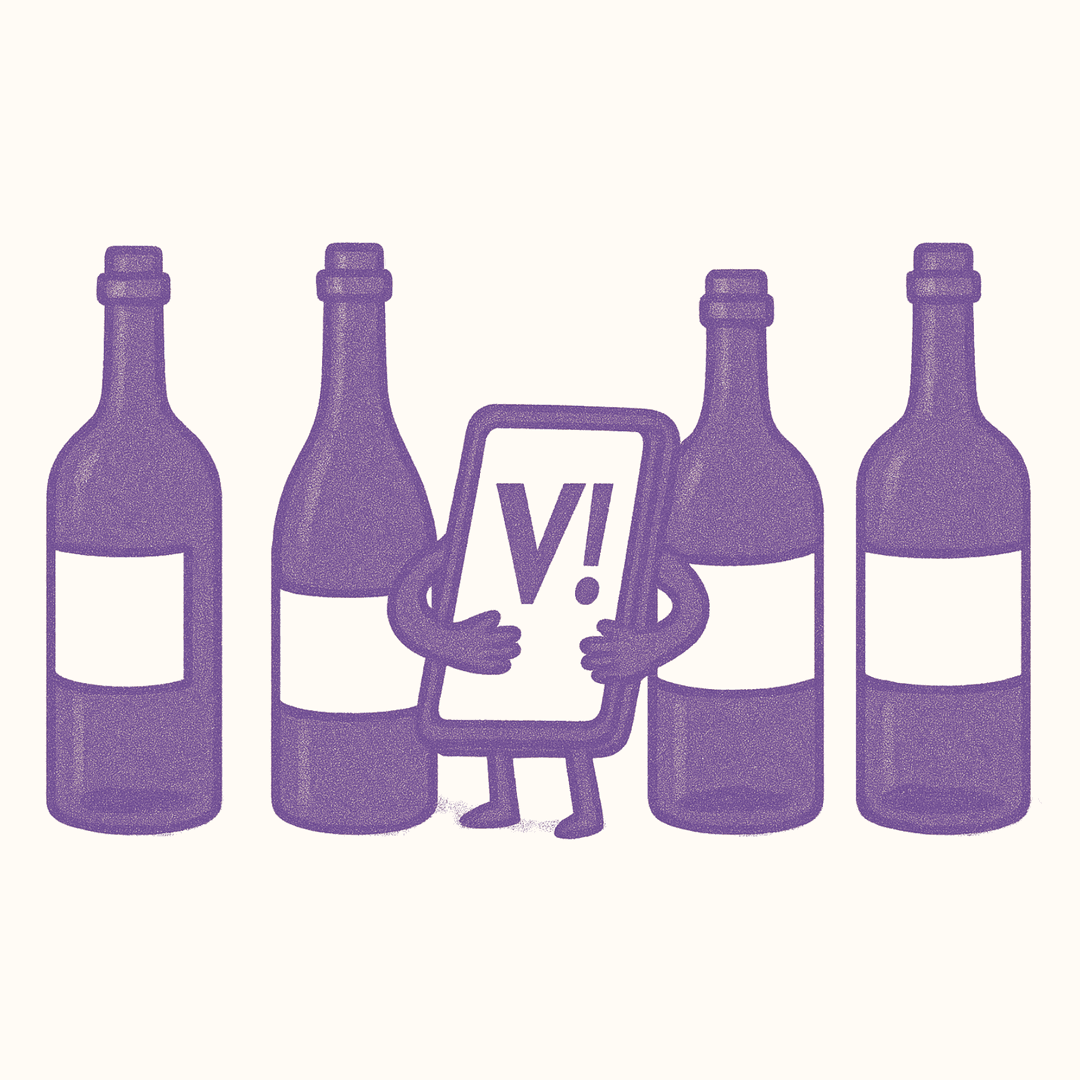
How to Learn Wine Like a Language (The Beginner's Duolingo Approach)
Discover how to learn about wine using a simple, Duolingo-style approach. Bite-sized daily lessons make wine education easy, fun, and stress-free.
11 min read

Have you ever walked into a wine shop and felt completely lost? You stand there, looking at a massive wall of glass bottles. Some have fancy French words you cannot pronounce. Some have pictures of animals on the label. Some cost ten dollars, and others cost one hundred dollars. You just want a nice bottle to drink with dinner, but you feel like you need a college degree just to make a simple choice.

If this sounds like you, you are not alone. Millions of people feel the exact same way. Wine can feel very scary and intimidating. It often feels like a secret club where everyone else knows the password, and you are left standing outside in the cold.
Many people search the internet for "how to learn about wine" because they want to feel confident. They want to go to a nice restaurant, look at the wine list, and know exactly what to order. They want to buy a bottle as a gift for a friend and know that it tastes good. But when they try to learn, they quickly hit a wall. The information is too dense, too boring, or too snobby.
The Problem with Traditional Wine Classes
Most people think that to learn wine, you have to do something extreme. You might think you need to become a master sommelier who wears a fancy suit. You might think you need to sign up for very expensive courses, like the WSET (Wine & Spirit Education Trust) programs.
These traditional classes are great for professionals who want to work in the restaurant industry. But for the average person? They are simply too much. They cost hundreds or even thousands of dollars. They require hours and hours of studying thick, boring books. They make you memorize soil types in France, weather patterns in Italy, and strict rules about what you can and cannot drink.
This is the old way of learning. It is heavy, expensive, and stressful. It turns something fun—drinking a delicious glass of wine—into difficult homework. No wonder so many beginners give up before they even really start!
But what if there was a better way? What if you could find wine courses online free of stress and pressure? What if you could learn wine for beginners without ever opening a heavy textbook or taking a stressful exam?
Think about how we learn other things today. Think about how we learn languages. The way we learn has changed, and it is time for wine education to catch up.
The Language App Revolution
Ten years ago, if you wanted to learn Spanish or French, you bought an expensive CD box set or went to a night class at a local school. It was hard work. It took up a lot of your free time.
Then, language apps like Duolingo changed everything.
These apps realized that the human brain does not like to cram information all at once. The brain likes small, bite-sized pieces of information. It likes to play games. It likes to earn points, win badges, and keep daily streaks alive.
Language apps use something called "spaced repetition." This means they show you a new word, and then they show it to you again a few days later, just before your brain forgets it. This locks the word into your memory forever, without you even trying very hard.
You do not need to study for three hours on a Sunday afternoon. You just need five minutes a day while you drink your morning coffee, ride the bus, or wait in line at the grocery store.
This method works perfectly for languages. And here is the big secret that the wine industry does not tell you: Wine is exactly like a foreign language.

Why Wine is Exactly Like a Foreign Language
Let us look at why wine is a language, and why the language app method works so well for it.
First, wine has its own vocabulary. When wine experts talk, they use words like "tannins," "acidity," "body," and "finish." To a beginner, this sounds like complete gibberish. But just like learning the word for "hello" in Spanish, you can learn these wine words one by one.
Here are a few examples of wine vocabulary:
- Tannins: This is the dry feeling in your mouth after you sip a strong red wine. It feels a bit like sucking on a wet black tea bag. It makes your mouth pucker.
- Acidity: This is the mouth-watering feeling you get from a crisp white wine. It is like biting into a fresh, sour green apple or tasting lemon juice.
- Body: This is how heavy the wine feels in your mouth. Think about milk. Skim milk feels light and watery. Heavy cream feels thick and full. Wine is the exact same way. You can have light-bodied wines and full-bodied wines.
Second, wine has grammar. In a language, grammar is the set of rules for how words fit together to make sentences. In wine, the "grammar" is the region and the grape.
Once you learn that Cabernet Sauvignon grapes usually make full-bodied wines with high tannins, you understand a rule. Once you learn that wines from cool places (like Germany) usually have higher acidity than wines from hot places (like Australia), you understand another rule. You start to see how the pieces fit together.
Third, wine requires practice. You cannot learn to speak French just by reading a book in silence. You have to speak the words out loud. You have to listen to native speakers.
Wine is the exact same. You cannot learn wine just by reading articles. You have to taste it. You have to smell it. You have to pay close attention to what is in your glass.
If wine is a language, then the absolute best way to learn it is with a wine education app that acts just like a language app.
The Duolingo Approach to Wine
Imagine learning wine the same way you learn a language on your smartphone. No thick books. No expensive classes. Just a few minutes a day of fun, easy learning.
Here is how the beginner's Duolingo approach to wine works in real life:
1. Bite-Sized Lessons
Instead of reading a fifty-page chapter on the wines of Italy, you take a three-minute lesson on one specific grape, like Pinot Grigio. You learn three simple facts about it. Where does it grow? What does it taste like? What food does it go well with? That is it. You finish the short lesson, feel good about yourself, and move on with your day.
2. Daily Quizzes
To make sure you remember what you learned, you take short, fun quizzes. A quiz might ask: "Which of these wines has high acidity?" You tap the screen to answer. If you get it wrong, the app gently corrects you and explains why. If you get it right, you earn points. Quizzes make learning active. You are not just staring blankly at a page; you are thinking, playing, and solving problems.
3. Streaks and Habits
The hardest part of learning anything new is staying consistent. Language apps use "streaks" to keep you motivated. If you do a lesson every day, your streak goes up. You do not want to break your streak and lose your progress, so you keep coming back.
A good wine education app does the exact same thing. It turns learning into a daily habit. Five minutes a day might not seem like a lot, but it adds up to over thirty hours of learning in a single year! That is more than enough time to become very confident about wine.
4. Real-World Practice
In a language app, you practice speaking into your phone's microphone. In a wine app, you practice tasting in real life. When you open a bottle of wine at dinner, you do not just drink it fast without thinking. You stop. You look at the color. You smell it. You take a sip and think about the flavors. Then, you log your thoughts in the app. This connects the theory you learned in your daily lessons with the real world.
How to Build Your Daily Wine Habit
If you want to use this modern approach, you need a system. Here is a simple, step-by-step guide to learning wine without the stress.
Step 1: Start a Wine Journal
The most important tool for any beginner is a wine journal. You need a place to write down what you drink. Human memory is not very good. If you drink an amazing wine on Friday night, you might completely forget its name by Monday morning.
Every time you drink a wine, write down the name, the grape, and the region. Then, write down a few simple notes. Did you like it? Did it taste like cherries? Was it sour? Was it sweet?
You do not need to use fancy words. If a wine smells like your grandmother's perfume, write that down! If it tastes like a burnt piece of toast, write that down. Your journal is for you, and there are no wrong answers.

Step 2: Compare Your Palate with the Experts
When you are a total beginner, it is hard to know what you are tasting. You might take a sip and think, "Well, it just tastes like wine." That is completely normal!
To get better, you should compare your notes with expert reviews. If an expert says a certain wine tastes like green bell pepper, take another sip. Can you find the green bell pepper flavor? Sometimes, just knowing what to look for helps your brain find it. This is a great way to train your palate (your sense of taste) over time.
Step 3: Learn the Stories Behind the Bottles
Wine is not just grape juice made in a factory. It is history. It is geography. It is farming. Every single bottle of wine has a unique story.
When you drink a wine, take two minutes to learn about the winery. Who made it? How long has their family been making wine? What is special about the dirt where the grapes grow? Learning these fun facts actually makes the wine taste better. It gives the wine a soul and a personality.
Step 4: Map Your Journey
Wine comes from all over the world. From the rolling hills of Tuscany in Italy to the sunny valleys of California. From the high mountains of Argentina to the breezy coast of New Zealand.
As you drink different wines, keep track of where they come from. Look at a map. Over time, you will see a beautiful picture of your wine journey. You will see which countries you love and which countries you still need to explore.

Enter Vinoh: Your Wine Education App
You could try to do all of this with a paper notebook, a pen, and hours of Google searches. But that takes a lot of time and effort. That is exactly why we built Vinoh.
Vinoh is an iOS wine app designed specifically for beginners who find wine intimidating. We believe that you do not need to study hard to understand wine. You just need five minutes a day, like a language app.
Vinoh has everything you need to learn wine easily and quickly.
Wine Journeys: Bite-Sized Courses
The heart of Vinoh is a feature called Wine Journeys. These are Duolingo-style, bite-sized wine courses. They are fun, fast, and very easy to understand.
Instead of reading long, boring articles, you tap through short, colorful lessons. You learn about different grapes, famous regions, and how wine is actually made. Then, you take quick quizzes to test your knowledge and earn your daily progress.
We offer 2 free journeys to get you started on your path. If you want to dive deeper, you can unlock 3 more journeys with our Plus plan. It is the perfect way to find wine courses online free of boring lectures and snobby teachers.
Your Personal Wine Journal
Vinoh makes it incredibly easy to keep a wine journal. You do not need to type out long, complicated French names. You just use your phone's camera to scan the bottle.
Vinoh instantly recognizes the wine and fills in all the details for you. Then, you can easily log your tasting notes. You can record the wine's palette, write your own personal notes, and give it a star rating.
Compare and Learn
Once you log a wine, Vinoh shows you the facts. You can read expert reviews and critic scores. You can compare your own palate with what the experts say to see how you are doing. You can learn about the winery's history and discover the absolute best food pairings for that specific bottle.
See Your World Map
Every time you log a wine from a new country, Vinoh adds a pin to your personal country map. It is so satisfying to watch your map fill up as you taste wines from around the globe. You can even share your journal and your map with your friends to see who has tried the most regions!
Meet Soma: Your AI Sommelier
We wanted to make Vinoh even more helpful for beginners. So, we added a very special feature that you will not find in old textbooks.
Meet Soma. Soma is your personal AI wine assistant inside the Vinoh app.
Think of Soma as a friendly wine expert who lives right in your pocket. Soma is not a snob. Soma is here for helpful wine guidance, no matter how basic or silly your questions might seem.
The best part about Soma is that she actually learns your palate over time. As you scan bottles and log your tasting notes, Soma pays close attention to what you like and what you do not like.
If you tell Soma that you hate wines that are too sour, she will remember that forever. If you tell Soma that you love bold, fruity red wines, she will remember that, too.
When you are standing in the wine aisle feeling panicked, you can open Vinoh and ask Soma for help. She will recommend bottles that match your unique taste. She turns each pour into an exciting adventure. With Soma, you never have to guess if you will like a wine again. You will know.
The Joy of Learning Wine
Learning wine should never be a chore. It should be a joy. It is a wonderful journey of discovering new flavors, learning about new cultures, and hearing great stories.
When you treat wine like a language and use the bite-sized approach, everything changes. You stop worrying about making mistakes. You stop feeling intimidated by fancy labels and big price tags. You start having fun.
You learn a little bit every single day. You practice by tasting delicious drinks. You build your vocabulary one word at a time. And before you know it, you are completely fluent.
You will be the person at the dinner table who confidently picks the perfect bottle for the group. You will be the person who can explain why a certain wine pairs perfectly with the chicken dish. You will be the person who truly enjoys every single sip, because you finally understand what is in your glass.
Conclusion
If you have ever searched for "learn wine for beginners," your search is finally over. You do not need an expensive class. You do not need a massive textbook. You do not need to feel stressed.
All you need is a few minutes a day, a glass of wine, and the right tools in your pocket.
Download Vinoh today. Start your first Wine Journey. Scan your first bottle. Meet Soma, your new AI friend.
Take the beginner's Duolingo approach to wine, and watch as the confusing world of wine becomes clear, simple, and incredibly delicious. Cheers to your new wine adventure!